
YouTube automation with AI is one of the most talked-about online income strategies right now — but most people who try it fail within the first three months. Not because the strategy doesn’t work, but because they skip the fundamentals.
I have been working on YouTube for a long time let me share my personal experience with you!
I’ve spent months testing AI tools, analyzing faceless channels, and building my own content system at AI Earning Hub. This guide is what I wish existed when I started. It covers everything in one place: how to choose the right niche, which AI tools actually work, how to avoid the mistakes that kill most channels, and what monetization realistically looks like.
If you want a shortcut, this isn’t it. If you want a real roadmap, keep reading.
What Is YouTube Automation?
YouTube automation means running a channel without doing every task manually yourself. Instead of filming yourself on camera, writing every script from scratch, and editing every video by hand — you use AI tools and a repeatable system to handle the heavy lifting.
A typical automated channel uses:
- AI to generate scripts (ChatGPT, Claude)
- AI for voiceovers (ElevenLabs, Murf)
- AI or stock footage for visuals (Pika, Runway, Storyblocks)
- AI for thumbnails and graphics (Canva AI, Midjourney)
- A faceless format so you never appear on camera
The goal is to build a channel that generates views and income like a digital asset — working in the background even when you’re not actively creating.
The key misunderstanding: Automation doesn’t mean zero effort. It means smarter effort. The creators winning right now are not fully automated. They combine AI efficiency with human strategy and original thinking.
Does YouTube Allow AI-Generated Content?
Yes — YouTube officially allows AI-generated content. What YouTube rejects is content that is repetitive, reused, or offers no value to viewers. The production method doesn’t matter. The viewer experience does.
If you use AI to generate scripts, voices, and visuals while still adding original structure, useful information, and a clear purpose — your channel is fully eligible for monetization through ads, affiliate links, sponsorships, and digital products.
AI is not the problem. Lack of creativity and effort is.
For full details on what YouTube permits, you can review the official YouTube Monetization Policies directly — it clearly states that AI-assisted content is allowed as long as it meets originality and viewer value standards.
Why Most AI YouTube Automation Channels Fail
Before choosing a niche or buying any tools, you need to understand why most automation channels never reach monetization. The pattern is consistent:
1. They optimize for speed, not quality.
AI makes it easy to publish 30 videos in a week. But YouTube’s algorithm measures viewer satisfaction — average watch time, click-through rate, return visits. Fast, shallow content fails these metrics every time.
2. They copy viral channels without building trust.
Copying a successful channel’s format seems logical. But the original channel succeeded because it built audience trust over months. A new channel copying the same format has no trust foundation, so the algorithm tests it briefly and moves on.
3. They ignore niche-audience fit.
Picking a niche because it has high CPM doesn’t work if you have no genuine interest or knowledge in it. Viewers notice when content feels hollow.
4. They expect fast monetization.
YouTube requires 1,000 subscribers and 4,000 watch hours (or 10M Shorts views) to join the Partner Program. Most automation channels take 4–12 months to reach this even with consistent publishing.
5. Their AI content sounds robotic.
Audiences in 2026 are experienced. They immediately recognize generic AI narration, copied scripts, and low-effort visuals. The bar for “good enough” is higher than it was two years ago.
The good news: all of these mistakes are avoidable with the right approach.
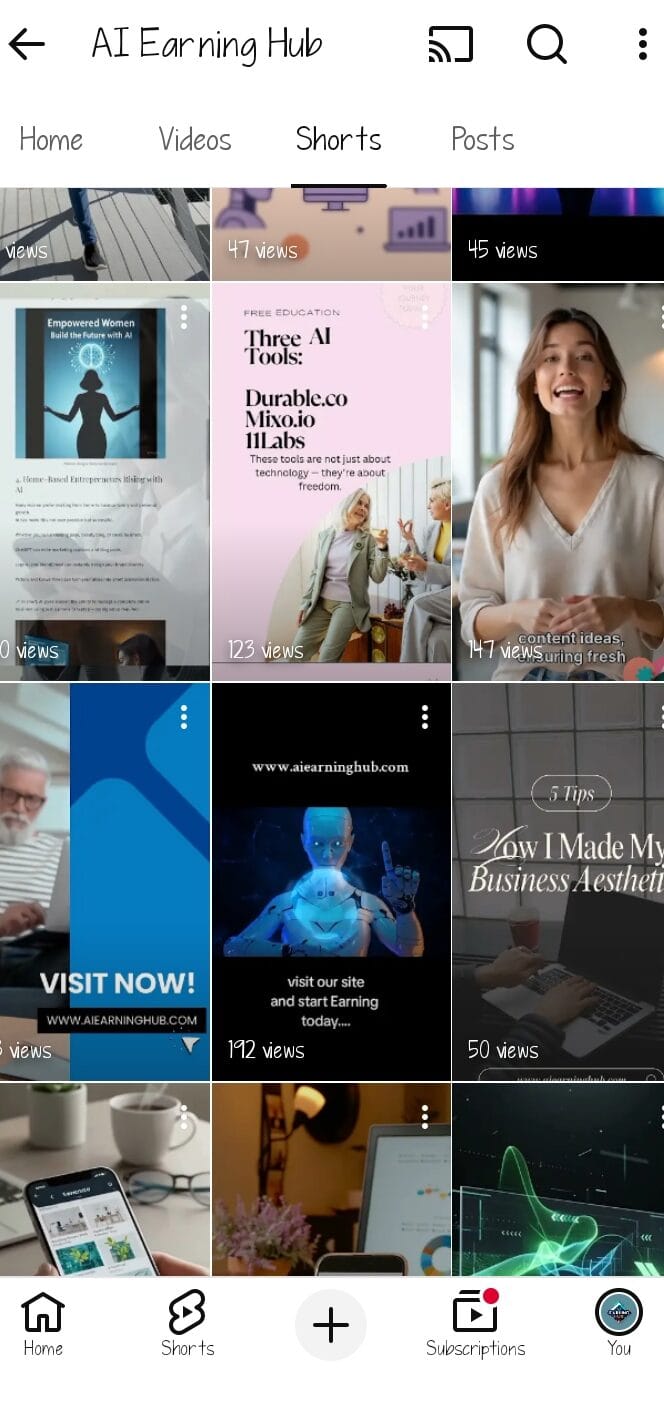
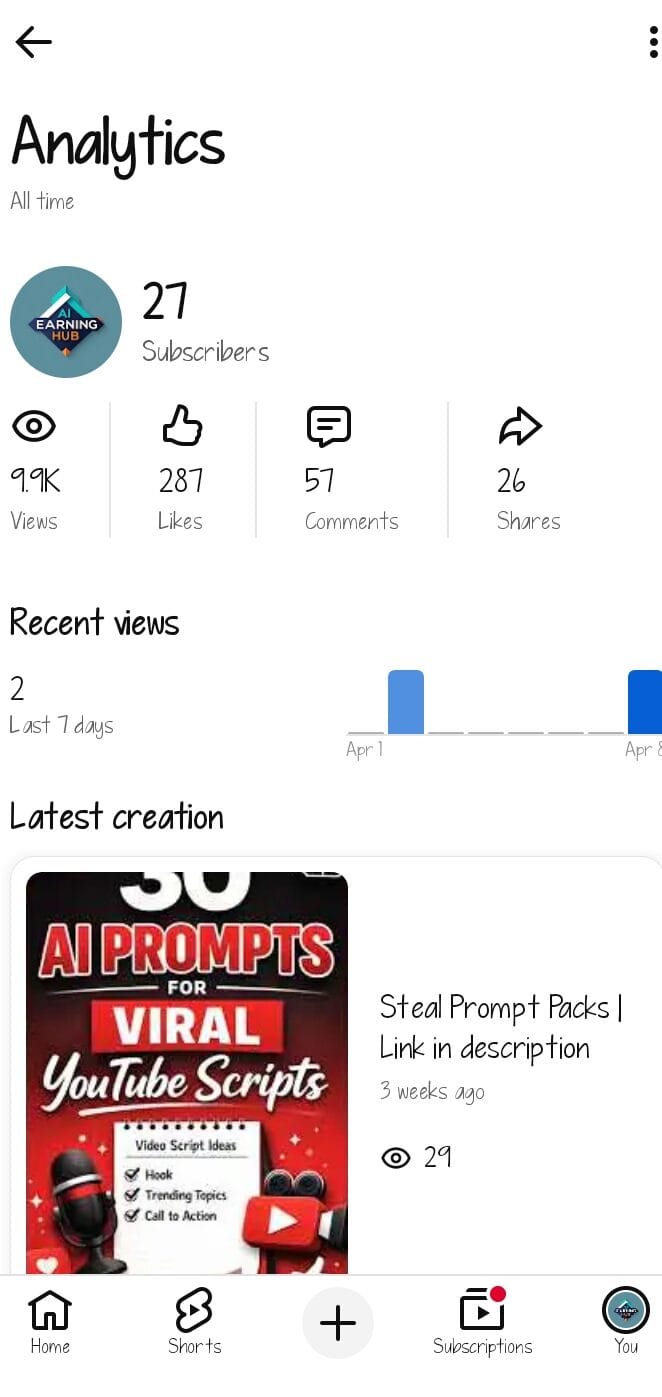
This one is my own channel in which I used AI generated content but it fails

See our supporting article which covers the actual reason of failure in YouTube automation
How to Choose the Right Niche for YouTube Automation
Your niche is the single most important decision you’ll make. Get it right and everything becomes easier. Get it wrong and no amount of AI tools will save your channel.
What Makes a Good Automation Niche?
A strong YouTube automation niche has three qualities:
- Evergreen demand — people search for it year-round, not just during trends
- Faceless-friendly format — you can create it without appearing on camera
- Monetization potential — decent CPM and affiliate/sponsorship opportunities
The most important question to ask when evaluating a niche is: “Will people still be searching for this in five years?” Personal finance, AI tools, health, and productivity will always have demand. A trending meme format will not.
I have written about Best YouTube Niches for you in details! Have a Look Top YouTube Niches in 2026: Best Evergreen Ideas
The Best YouTube Automation Niches
AI Tools & Tech Tutorials
CPM: $10–$25 | Difficulty: Medium | Growth: Very High
The strongest niche for AI-powered channels right now. People constantly search for how to use ChatGPT, Canva AI, automation tools, and productivity software. Demand increases every month as more people adopt AI at work. Affiliate opportunities are excellent because most AI tools have generous referral programs.
Best video formats: “Top 5 AI tools for [specific task]”, tool walkthroughs, comparison videos, beginner tutorials
Finance & Make Money Online
CPM: $15–$30 | Difficulty: High | Growth: Stable/High
The highest-paying niche on all of YouTube. Every video attracts high-value advertisers (banks, investing apps, financial services). The downside is heavy competition. To stand out, you need a specific angle — for example, “making money with AI for beginners in Pakistan” is more targetable than generic “make money online” content.
Best video formats: side hustle explainers, income report walkthroughs, beginner guides to specific platforms
Faceless Storytelling / Mystery / History
CPM: $5–$15 | Difficulty: Low-Medium | Growth: Stable
One of the best niches for long watch time and binge-watching behavior. Viewers return for more, which builds channel authority fast. AI voiceover works perfectly here because the narration style suits documentary-style content. Unsolved mysteries, historical events, and psychological case studies all perform well.
Best video formats: 10–20 minute narrative videos, “the untold story of…”, mystery explainers
Motivation & Self-Improvement
CPM: $6–$14 | Difficulty: Low | Growth: High (especially Shorts)
Extremely fast growth on YouTube Shorts. Emotional content drives shares and saves, which signals the algorithm positively. The challenge is standing out — this niche is saturated with generic quote videos. The channels that win add unique storytelling, personal perspective, or unusual angles to familiar topics.
Best video formats: short motivational clips, mindset explainers, success habit breakdowns
AI-Generated Facts & Documentary Shorts
CPM: $5–$12 | Difficulty: Low | Growth: Very High on Shorts
Short factual content covering space, business, psychology, history, or science performs extremely well on Shorts. AI makes this niche easy to produce at scale. The key is accuracy — fact-check everything, because misinformation gets flagged quickly.
Best video formats: “5 facts about X”, quick history breakdowns, science explainers under 60 seconds
Relaxation & Ambient Content
CPM: $3–$8 | Difficulty: Very Low | Growth: Stable
Long watch times, global audience, and very easy to produce with AI visuals and music. Lower CPM but less competition and easier to scale. Good for building a passive content library.
Best video formats: sleep sounds, study music, meditation visuals, ambient lofi content
Niche Selection Checklist
Before committing to a niche, validate it with these steps:
- Search the topic on YouTube and check if results show videos from the last 6 months (active demand)
- Check Google Trends for the keyword — is it flat, growing, or declining?
- Look at mid-size channels (50K–500K subscribers) in the niche — are they getting views on recent videos?
- Ask yourself: “Can I make 50+ videos on this topic without running out of ideas?”
If all four answers are yes, the niche is worth testing.
Step-by-Step: How to Start a YouTube Automation Channel
Step 1: Choose One Niche and Commit
Don’t mix topics in one channel. YouTube’s algorithm recommends your videos to people who’ve watched similar content. A channel that mixes AI tools with cooking recipes confuses the algorithm and splits your audience. Pick one niche and stay consistent for at least 90 days before evaluating results.
Step 2: Build Your AI Tool Stack
You don’t need expensive tools to start. Here’s a beginner-friendly setup:
| Task | Free Option | Paid Option |
|---|---|---|
| Script writing | ChatGPT (free tier) | Claude, Jasper |
| Voiceover | ElevenLabs (free tier) | ElevenLabs Pro, Murf |
| Video editing | CapCut (free) | Premiere Pro |
| Visuals/B-roll | Pexels, Pixabay | Storyblocks, Runway |
| Thumbnails | Canva (free) | Canva Pro, Midjourney |
| Research | Google, YouTube search | VidIQ, TubeBuddy |
Start with free tools. Upgrade only once you’re consistently publishing and seeing early traction.
If you want to validate which niches are actually growing right now, Google Trends is a free tool that shows real search demand over time — use it before committing to any niche.
Step 3: Create Your First 10 Videos Before Judging Results
The first 10 videos are for learning, not growing. You’re learning how to use the tools, finding your format, and testing what resonates. Don’t judge the channel’s potential based on these early videos.
Focus on: clear audio, readable text overlays, a strong first 10 seconds, and useful information throughout.
Step 4: Optimize Every Video for Search
YouTube is a search engine. Every video needs:
- A keyword in the title (use natural language, not stuffed keywords)
- A description that explains what the video covers in 2–3 sentences
- 5–8 relevant tags
- Chapters/timestamps for videos over 5 minutes
- A compelling thumbnail with clear text and contrast
For shorts, use trending audio and a strong hook in the first 2 seconds.
Step 5: Publish Consistently on a Sustainable Schedule
Consistency beats volume. Publishing 3 quality videos per week beats publishing 10 rushed ones. Set a schedule you can maintain for 6 months without burning out.
A sustainable starting schedule:
- 2–3 long-form videos per week (8–15 minutes)
- 3–5 Shorts per week (repurposed from long-form content)
Step 6: Monetize Beyond Just AdSense
Don’t wait for YouTube Partner Program to start earning. Build monetization in from the start:
- Affiliate marketing: Recommend AI tools you use with affiliate links in descriptions
- Digital products: A prompt pack, a template bundle, or a mini-course related to your niche
- Sponsorships: Reach out to small AI tool companies once you hit 1K subscribers
- AdSense: Apply once you hit 1,000 subscribers + 4,000 watch hours
The Realistic Timeline for YouTube Automation

Here’s what to actually expect:
YouTube Automation is a real journey and sometimes difficult one when I started a channel I used to think it will be very easy if every task is done by AI but actually it’s not!! Have a look into the realistic path..
Month 1–2: Learning phase. Low views, testing formats, refining your workflow.
Month 3–4: Early traction. If your niche and format are right, you’ll start seeing some videos gaining consistent views. Usually 50–300 views per video.
Month 5–6: Growth signals. A video or two may break out. Subscriber growth becomes more consistent. This is when many people quit — don’t.
Month 6–10: Monetization territory. With consistent publishing, most channels in good niches reach the 1,000 subscriber threshold in this window.
Month 10–18: Compounding phase. Old videos keep generating views. New videos benefit from existing audience. Income starts becoming meaningful.
The channels that succeed are not necessarily the best — they are the most consistent over the longest period.
What Separates Successful Automation Channels From Failed Ones
After analyzing dozens of channels and building content in this space, the difference comes down to four things:
1. They treat each video as a search asset, not just content.
Every video is built around a keyword someone is actively searching for. The title, description, and script all address that specific search intent.
2. They add one unique element to every video.
This could be a personal experience, a contrarian opinion, original data, or a unique format. Something that can’t be copy-pasted from another channel.
3. They review their analytics weekly.
Average view duration tells you where people stop watching. Impressions vs. clicks tells you if your title/thumbnail is working. They optimize based on data, not guesses.
4. They think in 12-month timelines, not 12-day ones.
YouTube growth is not linear. Patience combined with consistent improvement is the actual strategy.
Final Thoughts
YouTube automation with AI is a real opportunity — but it’s not a passive income button. It’s a content business that requires real thinking, real consistency, and real patience.
You have to be consistent full of patience and dedication to earn with YouTube Automation Seriously it is a tough roadmap of you expect instant result. You have to work properly before expecting any result. Learn before you apply to anything.
The creators quietly building profitable channels right now are not the ones with the most expensive tools. They’re the ones who chose a focused niche, built a repeatable system, added genuine value, and kept going when growth was slow.
That’s available to you too. Start with one niche. Build your first 10 videos. Improve from there.
Written by Bushra Haider, founder of AI Earning Hub — sharing experience-based insights on using AI tools to build sustainable online income.