
If you search Google for “best AI tools for blogging”, you’ll find hundreds of articles claiming that one tool can magically build traffic, money, and authority overnight.
I used to read those articles too.
But after actually running AI Earning Hub (www.aiearninghub.com) on my own — publishing consistently, fixing technical issues, dealing with indexing delays, and applying for AdSense — I realized something important:
AI tools don’t build blogs. People do.
AI only supports the decisions you already make.
So instead of writing another generic tools list, this article is a real breakdown of the AI tools I personally use, how I use them, where they helped, and where they didn’t — based on real experience in 2026. You can Also read my previous article related to my personal experience of running a website in more depth How I Built AI Earning Hub: Mistakes, Fixes & What I’d Do Differently

Why I Stopped Trusting “Best AI Tools” Lists
Most tool reviews online are written by people who:
- Haven’t used the tools long enough
- Copy features from landing pages
- Focus more on affiliate commissions than real workflows
When you’re running a blog solo, tools behave differently.
What matters isn’t how many features a tool has — it’s whether it reduces friction in your daily process.
That mindset changed how I choose tools.
My Actual Blogging Workflow (Simple but Real)
Here’s what my real workflow looks like:
- Topic selection based on search intent + experience
- Drafting with AI assistance (not full automation)
- Manual editing and restructuring
- Image creation for blog + Pinterest
- SEO optimization
- Publishing and internal linking
No shortcuts. No autopilot blogging.
Now let’s talk about the tools.
Tool #1: ChatGPT — My Thinking Partner, Not My Writer

ChatGPT is the most misunderstood AI tool in blogging.
I do not use it to publish raw content.
Instead, I use it for:
- Structuring article outlines
- Expanding ideas I already understand
- Rewriting unclear paragraphs
- Checking tone consistency
What Worked
- Saves mental energy
- Helps organize long articles
- Great for brainstorming angles
What Didn’t
- First drafts often sound robotic
- Needs heavy human editing
- Cannot replace experience
Lesson learned:
If you let AI speak for you, Google can tell.
If you guide AI, it becomes useful.
Tool #2: AI Image Tools for Pinterest & Blog Visuals
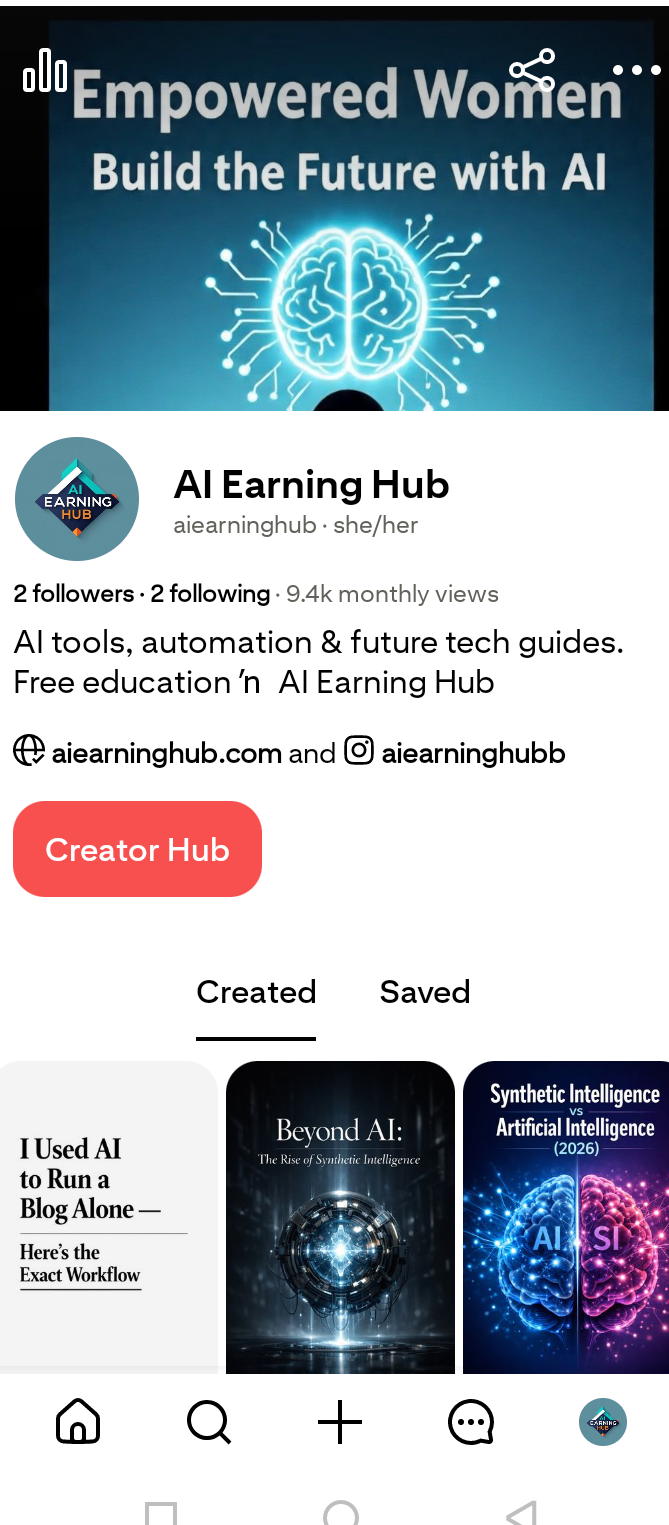
Pinterest is a big traffic experiment for me, so visuals matter.
I use AI-based design tools to:
- Generate feature images
- Create Pinterest pin layouts
- Maintain visual consistency
What Helped
- Faster image creation
- No dependency on stock photos
- Better branding control
What Didn’t
- Over-designed pins don’t convert
- Simple, readable designs perform better
Unexpected insight:
Minimal designs with clear text outperform complex AI art.
Tool #3: SEO Plugin (Rank Math) — A Guide, Not a Guarantee
SEO plugins are helpful — but dangerous if misunderstood.
I use Rank Math to:
- Add meta titles and descriptions
- Monitor basic on-page SEO
- Manage schema and indexing signals
What Helped
- Keeps technical SEO clean
- Prevents common mistakes
- Helps structure content
What It Cannot Do
- It cannot rank your content
- It cannot force Google to index pages
- It cannot fix weak articles
Reality check:
SEO tools assist SEO — they don’t replace it.
A Tool I Tried — and Stopped Using

I tested a so-called “AI auto-blogging” tool that promised:
- Instant articles
- Fast indexing
- Traffic in weeks
I stopped using it.
Why?
- Content felt generic
- No control over quality
- Increased cleanup work later
Lesson:
Any tool that removes your thinking also removes your authority.
What Matters More Than Any AI Tool
After months of testing, here’s what actually made a difference:
- Writing from experience
- Fixing broken internal links
- Improving readability
- Publishing consistently
- Being patient with indexing
No tool replaced these fundamentals.
Can AI Tools Build a Blog Alone in 2026?
Honestly? No.
AI tools:
- Speed things up
- Reduce effort
- Improve clarity
But trust, authority, and rankings come from:
- Real insight
- Original structure
- Human decisions
AI supports the process — it doesn’t own it.
in my latest blog I discussed about how google is ignoring my site continuously and how I fix it
Final Thoughts
If you’re building a blog today, stop asking:
“Which AI tool will make me successful?”
Start asking:
“Which tool helps me think and execute better?”
That shift changed how I run AI Earning Hub, and it’s the reason I’m focusing on quality over shortcuts in 2026.
About the Author
Bushra Haider is the founder of AI Earning Hub (www.aiearninghub.com), where she documents real-world experiments with AI tools, blogging systems, and content strategy. Her work focuses on practical usage, honest reviews, and long-term blogging growth — not unrealistic promises or automation myths.

Leave a Reply